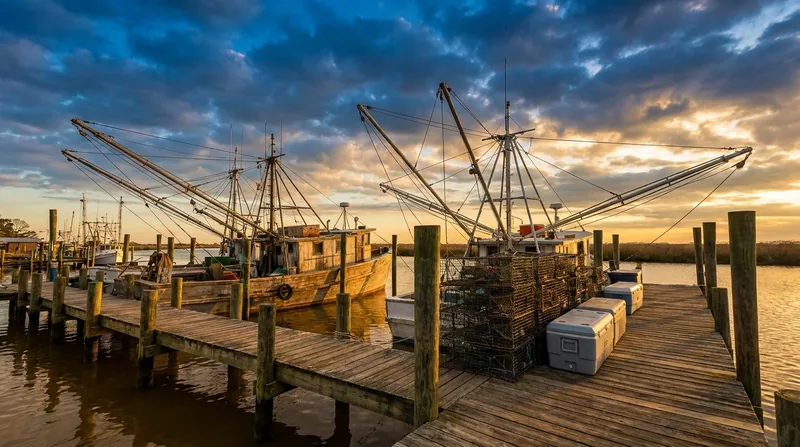
How to Start a Seafood Dealer, Shrimp or Oyster Business in Mississippi: MDMR Licenses
How to Start a Seafood Dealer, Shrimp or Oyster Business in Mississippi: MDMR Licenses
If you plan to buy, sell, harvest, or process shrimp, oysters, or other Gulf seafood in Mississippi, the license that matters most comes from the Mississippi Department of Marine Resources (MDMR). Most people looking for a mississippi shrimp license or an oyster mississippi permit start in the wrong place, usually the Secretary of State. That office handles your business entity, not your seafood license. Mississippi also has no state general business license, so getting open is a series of separate registrations rather than one permit. This guide puts them in the order that avoids paying twice or waiting on a form you did not know about.
This article is informational content, not legal or tax advice. Fees and rules change. The figures below come from the MDMR 2026 resident commercial license table, and you should confirm current amounts with the agency before you pay. If your operation is complex, such as multiple vessels, a processing plant, or owners who live outside Mississippi, talk with a qualified attorney and a CPA before you file.
MDMR license fees at a glance
These are the 2026 resident commercial license fees listed by MDMR. The table notes that licenses are issued in person at the Biloxi office.
| License | Resident fee |
|---|---|
| Seafood dealer | $100 |
| Seafood processor | $100 |
| Shrimp, vessel under 30 feet | $50 |
| Shrimp, vessel 30 feet to 45 feet | $75 |
| Shrimp, vessel over 45 feet | $100 |
| Oyster tonging | $50 |
| Oyster dredging | $100 |
| Off-bottom oyster aquaculture | $50 |
| Crab trap | $75 |
| Live bait dealer | $50 |
Two details change the math. First, every commercial license listed here expires April 30, including the seafood dealer and seafood processor licenses. Second, nonresident fees are much higher than resident fees. If any owner or license holder is not a Mississippi resident, get the nonresident amounts from MDMR before you budget.
What you need before you apply
- Your legal business name and entity type. Decide whether you are operating as a sole proprietor, an LLC, or a corporation. An LLC Certificate of Formation (Form F0100) costs $50 at the Secretary of State.
- A Mississippi street address. The business needs a physical Mississippi address, and an LLC needs a registered office and registered agent in the state.
- Residency status for each license holder. The resident fee applies only to residents, so confirm this for every person named on a license.
- Vessel length, if you plan to fish shrimp. The shrimp license fee depends on the length of the vessel, so measure before you apply rather than estimating.
- Harvest method, if you plan to work oysters or crab. Tonging, dredging, off-bottom aquaculture, and crab traps each have their own license.
- A city, town, or village privilege license application if your business sits inside a municipality.
- Sales tax registration details if you will make retail sales.
- Payment that MDMR accepts in person. Confirm the accepted payment types with the Biloxi office before you make the trip.
Step-by-step: getting licensed to sell shrimp, oysters, or seafood in Mississippi
Step 1: Decide which MDMR license matches your activity
Start by writing down what the business will physically do with seafood. In general terms, a seafood dealer buys seafood for resale, and a seafood processor handles or processes it. A harvester licensed for shrimp, oysters, or crab takes product from the water. A live bait dealer sells bait. Some operations need more than one license, such as a harvester who also sells product. Because the license type drives the fee, confirm the definitions with MDMR before you apply and ask whether your planned activity needs one license or several.
Step 2: Confirm residency before you pick a fee
Resident fees appear in the table above. If you or a partner live outside Mississippi, the nonresident fee for the same license is much higher. Decide early whether the owner who will hold the license is a resident. Ask MDMR about what changing the license holder later involves, so get this right the first time.
Step 3: Form the business entity and check the name
Your MDMR license is issued to a legal person or business, so form the entity before you apply. For an LLC, the Mississippi Secretary of State requires the name to contain the words “limited liability company” or the abbreviation “L.L.C.” or “LLC.” The name must also be distinguishable on state records from other registered entities and reserved names. You can reserve a name for 180 days for a $25 fee.
File the Certificate of Formation (Form F0100) through the Secretary of State online filing portal at corp.sos.ms.gov. Online filings paid for online are usually approved and filed immediately. Filings that need staff review are normally returned within 24 hours. The state publishes no expedite fee for formation filings. Corporations file Articles of Incorporation (Form F0001) for $50 instead.
Then calendar the annual report. An LLC files its Mississippi annual report (Form F0108) online, with no fee, on or after January 1 and by April 15 each year. Missing it can lead to administrative dissolution, which would make your MDMR license application a problem.
Step 4: Register a fictitious business name if you trade under another name
If your seafood company will sell under a name different from its legal name, you need a Fictitious Business Name Registration (Form F0070) for $25. Many first-time owners look for this at the county courthouse, but the filing goes to the Mississippi Secretary of State, Business Services Division. Check the current fee schedule at sos.ms.gov before filing.
Step 5: Appoint a registered agent
Every Mississippi LLC must maintain a registered office and a registered agent for legal papers. The agent must be a Mississippi resident individual or an entity authorized to do business in Mississippi, and the agent needs a physical Mississippi street address. Commercial registered agents file a listing statement with the Secretary of State for $100 and must accept or decline a representation within 14 days. Noncommercial agents need your company to have their permission, but they do not register with the state. Choose your agent with the same care you would give a bank, since a missed service notice can cause real problems.
Step 6: Get the local privilege license
Mississippi issues no single statewide business license. Instead, every city, town, and village issues its own privilege license under Miss. Code 27-17. Counties license only businesses outside municipal limits. That means a seafood dealer in Gulfport, Biloxi, Pascagoula, or Ocean Springs will deal with the city, while a dock in unincorporated county land will deal with the county. Ask the city clerk or county chancery clerk which applies to your site and what the fee is, since local amounts vary and this guide does not list them. Industry-specific licenses come from the relevant state board, so ask whether any additional board applies to your trade.
Step 7: Register for a sales tax permit if you make retail sales
If you sell seafood directly to customers at retail, register with the Mississippi Department of Revenue for a sales tax permit at dor.ms.gov. The permit has no fee. A bond may be required if you have no permanent Mississippi location. The state sales tax rate is 7%, with no county add-on. Cities add their own levies in Jackson and Tupelo only, so for most coastal sellers the rate is the state rate. Whether a particular seafood sale is taxable is a question for the Department of Revenue, not a safe assumption. Do not assume a product is exempt because it is fresh or sold by the pound.
Step 8: Check whether health permits apply
An MDMR license does not replace health permits. If your operation involves a processing plant or restaurant-style handling of seafood, check with the Mississippi State Department of Health on its seafood and food permit rules before you buy equipment or sign a lease. Those rules can affect your facility design, which is far cheaper to settle before construction than after.
Step 9: Apply for your MDMR licenses in person
Take your entity documents, your residency information, your vessel details if you are fishing shrimp, and the license application to the MDMR Biloxi office, where the 2026 table indicates licenses are issued in person. Bring the payment method the office accepts. Ask whether the license can be issued the same day, and whether you need to return for any inspection or additional paperwork. Keep the receipt and the license number with your business records.
Step 10: Build a renewal calendar
All commercial MDMR licenses expire April 30. Your LLC annual report is due April 15, so both deadlines fall in the same few weeks. Put them on one shared calendar with reminders at least 30 days out. Do not wait for a renewal notice to arrive, because you cannot legally buy or sell under an expired license.
Expected results
Completing these steps typically gives you the registrations you need to begin operating legally in Mississippi. It may also make it easier to deal with buyers, banks, and insurers who ask for proof that your company is registered and licensed. Results depend on your operation, your harvest or sales volume, your market, and the rules that apply to your specific activity, so licensing should be seen as a requirement to meet rather than a guarantee of sales, dock access, or profit. Keep your records current, and confirm the rules with the agencies named above whenever your activity changes.
Tips that save time
- Form the entity and check the name first. Agencies work from your exact legal name, so a mismatch between your LLC name, your fictitious name, and your license application creates delays.
- Measure your vessel before you apply. The shrimp license tier depends on length, so an accurate measurement prevents paying the wrong fee.
- Ask MDMR about nonresident fees before you commit. If a co-owner lives out of state, the cost difference can change your plan.
- Keep one license binder. Store your Certificate of Formation, annual report confirmation, fictitious name filing, registered agent details, city license, sales tax permit, and each MDMR license in one place.
- Plan your payroll rules. Mississippi has no state minimum wage law, so federal minimum wage rules under the Fair Labor Standards Act apply to any dock workers you hire. Confirm the details with a CPA or employment attorney.
- Use local advisors. The Mississippi Small Business Development Center Network, hosted by the University of Mississippi with 19 locations statewide, can help you think through your plan. Start at mississippisbdc.org.
Common mistakes to avoid
- Looking for a state general business license. Mississippi does not issue one. Your city or county privilege license and the agency-specific licenses are what you need.
- Filing an assumed name with the county. Fictitious business name registrations go to the Secretary of State.
- Skipping the city privilege license. A seafood business inside a municipality still needs the city license even after the state paperwork is done.
- Applying at the resident fee when an owner is not a resident. The resident fee does not apply to nonresidents, and the difference is large.
- Estimating vessel length. Guessing can put you in the wrong shrimp license tier.
- Missing the April 30 expiration. Commercial licenses, including dealer and processor licenses, expire that date every year.
- Missing the April 15 LLC annual report. Late filings can lead to administrative dissolution.
- Assuming seafood sales are exempt from sales tax. Ask the Department of Revenue how your specific sales are treated.
- Assuming franchise tax applies to your LLC. The franchise tax applies to corporations, not to an LLC taxed as a partnership. Whether your LLC is taxed as a corporation is a question for your CPA.
- Overlooking health rules. A processing plant or restaurant-style handling operation may need Mississippi State Department of Health permits in addition to MDMR licenses.
Why the Gulf Coast fits a seafood business
The Mississippi coast has the cities most likely to support a seafood dealer or processor, including Gulfport, Biloxi, Pascagoula, Gautier, Ocean Springs, and Long Beach. The state's notable industries include shipbuilding, logistics, and agribusiness, and those sectors can connect a seafood company to transport, cold storage, and wholesale buyers. A dealer or processor sitting in that network may find it easier to move product than one far from the water. The fit is a reason to look at the coast, not proof of a particular outcome. Study your local buyers, your transport options, and your competition before you sign a lease or buy equipment.
Where to confirm the rules
- Mississippi Secretary of State, Business Services Division: sos.ms.gov/business-services for entity formation, annual reports, and fictitious names. Search existing entity names at corp.sos.ms.gov.
- Mississippi Department of Revenue: dor.ms.gov for sales tax permits and taxability questions.
- Mississippi Department of Marine Resources: confirm current commercial license fees, nonresident amounts, and the Biloxi office process directly with the agency.
- Mississippi State Department of Health: confirm seafood and food permit rules for any processing or restaurant-style operation.
- Your city clerk or county chancery clerk: confirm your privilege license and its fee.
- U.S. Small Business Administration, Mississippi district: sba.gov/district/mississippi for general small business guidance.
Next steps
Start with the entity and name, then confirm your residency and license type, then handle the city license and any tax registration, and apply for the MDMR licenses in person in Biloxi. Set your April 15 and April 30 reminders the day you finish. Before you spend money on boats, equipment, or leases, confirm your plan with MDMR, your city, and a CPA or attorney. This article is informational content, not legal or tax advice.
Keep exploring: related Mississippi guides
- How to Start a Restaurant in Mississippi
- How to Start a Bakery Business in Mississippi
- How to Start a Food Truck in Mississippi
- How to Start a Bar or Nightclub in Mississippi
- Mississippi Alcohol License
- How to Start an LLC in Mississippi
- Mississippi Business License
- How Much Does It Cost to Start a Business in Mississippi
- All Mississippi business types
- Every Mississippi guide in one place