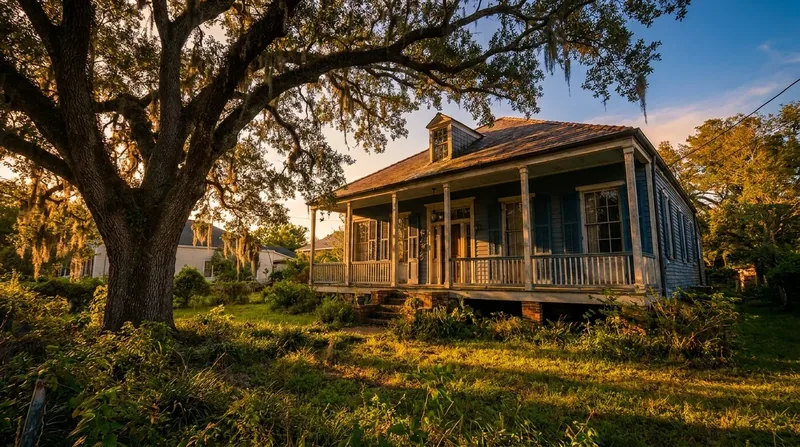
How to Start a Bed and Breakfast or Historic Inn in Mississippi: Permits, Taxes and Zoning
How to Start a Bed and Breakfast or Historic Inn in Mississippi: Permits, Taxes and Zoning
Opening a bed and breakfast in Mississippi is mostly a local process. The state gives you a business entity and a tax registration, and it requires you to collect lodging sales tax. No separate statewide bed and breakfast license or lodging permit was found. The approvals that can stop or reshape a project usually come from your city: zoning, conditional use, a privilege license, and any historic district review. If you are converting a historic home in Natchez, Vicksburg, Oxford or another older town, the city planning office is the first stop.
This guide walks through the order we would follow to open a bed and breakfast or small historic inn in Mississippi today. It covers the Secretary of State filings, the Department of Revenue registrations, the city items, and the questions to put to each agency. Where a figure or rule is not settled in the sources we checked, we say so and tell you who to ask.
Informational content only. This article is not legal, tax, zoning or financial advice. Rules, fees and local requirements change and vary by address. Talk with a Mississippi attorney and a CPA before you sign a purchase contract, form an entity or commit to a property.
What You Need Before You File
Gather these items first. Several steps depend on the others, and a missing item usually means a second trip to a government office.
- A primary business name and a backup name in case the first one is not available on Secretary of State records
- The property address, parcel information and the current zoning designation for the lot
- A Mississippi street address for your registered office, and a registered agent who can accept legal papers
- A short business plan showing room count, guest capacity, whether breakfast is served to all guests or only to overnight guests, and whether an innkeeper will live on site
- An employer identification number (EIN) from the IRS, which you can request online
- A filing and tax budget, plus contact details for the city clerk, the city planning office and the Mississippi State Department of Health (Environmental Health)
Step-by-Step: Opening a Bed and Breakfast in Mississippi
Step 1: Choose your legal structure
Most small inn owners form an LLC. The Certificate of Formation (Form F0100) costs $50 when filed with the Mississippi Secretary of State. An LLC is generally a pass-through entity, so its income is reported on the members' Mississippi returns. The LLC name must include the words “limited liability company,” “L.L.C.” or “LLC.”
A corporation files Articles of Incorporation (Form F0001) for $50. A corporation pays Mississippi corporate income tax at 0% on the first $5,000 of taxable income, 4% on the next $5,000 and 5% above $10,000. It also pays a franchise tax, which for tax year 2026 is $0.50 per $1,000 of capital above $100,000, with a $25 minimum. That tax is scheduled for repeal effective January 1, 2028. An LLC that elects corporate tax treatment pays the same corporate taxes. An LLC taxed as a partnership does not pay the franchise tax.
Ask a CPA which structure fits your ownership group and how you plan to take money out of the business. The filing fee is the same for an LLC and a corporation, so the decision rests on tax treatment and liability planning.
Step 2: Check zoning and conditional use before you buy
Zoning for a bed and breakfast is a city decision. Many Mississippi cities treat a B&B in a residential zone as a conditional use, which requires an application, a public notice and a hearing. Typical conditions include an innkeeper living on site, a cap on guest rooms, off-street parking and sign size limits. Some cities also add conditions on hours, meals or events.
Do not rely on the zoning map alone, because it does not show conditions attached to a specific use. Ask city planning these questions and get the answers in writing:
- Is a bed and breakfast permitted outright, by conditional use, or not at all in this zone?
- What parking, signage, occupancy and on-site residence conditions would apply?
- What is the application fee, and how long does the hearing process usually take?
Make your purchase contract contingent on a favorable answer. Losing a deposit is far cheaper than buying a historic house you cannot legally run as an inn.
Step 3: Confirm food service rules with the health department
No state lodging permit for a bed and breakfast was found. Serving breakfast is a separate question. Check with the Mississippi State Department of Health, Environmental Health, on whether your breakfast service needs a food permit. The answer can depend on what you serve, how it is prepared, and whether breakfast is served only to registered overnight guests.
Settle this before you finalize kitchen plans. Sinks, storage, ventilation and surfaces are expensive to change after construction. Ask whether a plan review is required before work starts and whether it applies to a historic kitchen.
Step 4: Clear and reserve your name
A name reservation costs $25 and holds the name for 180 days. Search the Secretary of State business entity database first. An LLC name must be distinguishable on state records from every registered entity and every reserved name.
Many inns operate under a public brand name that differs from the legal entity name. If you use one, file a Fictitious Business Name Registration (Form F0070) for $25 with the Secretary of State. It is not filed with the county. Clear the brand name against the state records and against the trademark search you run on your own.
Step 5: File your entity and appoint a registered agent
File online through the Secretary of State portal at corp.sos.ms.gov. Most documents paid for online are approved and filed immediately. Filings that need staff review are normally returned within 24 hours. Paper filings take significantly longer.
Every Mississippi LLC must keep a registered office and a registered agent in the state. The agent must be a Mississippi resident individual, or an entity authorized to do business in Mississippi, with a physical Mississippi street address. A commercial registered agent files a $100 listing statement with the Secretary of State and appears on the state website. A noncommercial agent is not registered with the state, but you must have the agent's permission before you list them. Registering the entity is a registration, not a license.
Step 6: Get your city privilege license
Mississippi issues no single general statewide business license. Under Miss. Code 27-17, every city, town and village issues its own privilege license. Counties license only businesses outside municipal limits. If your inn is inside city limits, the city clerk handles this step.
Ask the clerk for the fee schedule and whether a lodging or inn classification applies. Fees vary by city, so we do not list them here. Confirm the figure in writing before you budget for it.
Step 7: Register for sales tax with the Department of Revenue
Businesses that sell taxable goods or services register with the Department of Revenue (DOR) for a sales tax permit. The permit has no fee, but DOR may require a bond if you have no permanent Mississippi location. Apply through the DOR sales and use tax registration page at dor.ms.gov.
DOR taxes hotels, motels and tourist courts at the 7% state sales tax rate. Ask DOR how that rate applies to your room charges and whether breakfast bundled into the room rate is taxed the same way. Get the answer in writing, because bundled charges are a common source of underpayment.
Step 8: Check for a local tourism or hotel levy
Some cities and counties add a tourism or hotel levy on top of the state tax. The rate, the base and the collecting agency all vary. This is easy to miss because it is separate from the state permit. Ask the city clerk whether your city or county has one, and check the DOR Tourism and Economic Development Taxes information at dor.ms.gov.
The 7% state sales tax has no county add-on, and city sales tax levies apply only in Jackson and Tupelo. A hotel or tourism levy is a different charge, so do not assume the sales tax answer covers it.
Step 9: Check historic district and preservation rules
If the property is in a designated historic district or is a local landmark, exterior work can need approval before it starts. That includes signs, porch changes, paint colors, window replacement and additions. Natchez, Vicksburg and Oxford each have historic preservation review in parts of town, but the rules that apply to your address are set locally. Confirm them with the city before you buy and again before you order signs.
Short-term rental and B&B rules inside historic districts are also local. Ask the city whether your intended use is allowed in that district and whether any use restrictions attach to the property.
Step 10: Set up banking, insurance and records
Open a business bank account in the entity name and run all guest payments through it. Buy commercial insurance before you accept your first guest. Ask an agent about guest liability, food service exposure and coverage for an older building. Keep a record of every paid night, the tax collected on it and the date it was remitted.
Mississippi has no state minimum wage law. If you hire staff, federal wage and hour rules apply, so check the U.S. Department of Labor guidance before you set pay.
Step 11: Put the recurring deadlines on your calendar
The LLC annual report (Form F0108) is due April 15 each year. It must be filed online and carries no fee. A profit corporation files its Corporate Annual Report (Form F0008) by April 15 for $25. Missing the annual report can lead to administrative dissolution. Sales tax filing frequency is assigned by DOR, so confirm your schedule when you register.
Fees and Taxes at a Glance
| Item | Amount | Agency or source |
|---|---|---|
| LLC Certificate of Formation (F0100) | $50 | Secretary of State |
| Corporate Articles of Incorporation (F0001) | $50 | Secretary of State |
| Name reservation (180 days) | $25 | Secretary of State |
| Fictitious business name (F0070) | $25 | Secretary of State |
| Commercial registered agent listing statement | $100 | Secretary of State |
| LLC annual report (F0108), due April 15 | $0 | Secretary of State |
| Corporate annual report (F0008), due April 15 | $25 | Secretary of State |
| Sales tax permit | No fee (bond may be required) | Department of Revenue |
| State sales tax on hotels, motels and tourist courts | 7% | Department of Revenue |
| City privilege license | Set by each city, confirm with the clerk | City clerk |
| Hotel or tourism levy | Varies, confirm locally | City clerk and DOR |
| Food service permit | Confirm whether required | MSDH Environmental Health |
Owners of pass-through entities report business income on their personal Mississippi returns. For tax year 2026, the individual income tax is 0% on the first $10,000 of taxable income and 4% above that. The top rate steps down to 3.75% for tax year 2027.
Common Mistakes to Avoid
- Buying before zoning is confirmed. A conditional use can carry conditions that change your room count or parking plan.
- Looking for a state business license. Mississippi has none. The city privilege license and the sales tax permit are the items you need to get right.
- Filing the fictitious name with the county. It goes to the Secretary of State.
- Skipping the city privilege license. City licenses are issued by the city, not the state, so the state filings do not cover them.
- Assuming the state sales tax covers everything. Check for a local hotel or tourism levy separately.
- Remodeling the kitchen before the health department answers. Breakfast service rules can change what the kitchen must include.
- Changing the exterior of a historic building without review. Signs and porches are the usual problems.
- Missing the April 15 annual report. A missed report can lead to administrative dissolution.
- Using a registered agent without a Mississippi street address. The agent and the registered office must be in the state.
What to Expect From the Process
Results vary widely by location, room count, season and marketing, and nothing in this guide promises occupancy or income. Many owners find the permits and zoning take longer than the state filings. A conditional use hearing depends on the city's meeting calendar, so the timeline is not fixed.
A practical plan treats the first season as a test. Build a budget that does not depend on early bookings, and keep reserves for insurance, tax payments and repairs to an older building.
Where to Get Help
The Mississippi Small Business Development Center Network has 19 locations statewide, with its lead center hosted by the University of Mississippi. Its advisors can review a business plan at no charge. Use these official sources for the filings and tax questions above:
- Mississippi Secretary of State, Business Services Division: https://www.sos.ms.gov/business-services
- Online filing portal: https://corp.sos.ms.gov/corp/portal/c/page/corpnewfilings/portal.aspx
- Business entity search: https://corp.sos.ms.gov/corp/portal/c/page/corpBusinessIdSearch/portal.aspx
- Mississippi Department of Revenue: https://www.dor.ms.gov/
- Sales and use tax registration: https://www.dor.ms.gov/business/sales-use-tax/registration-information-sales-and-use-tax-applicants
- Mississippi Small Business Development Center Network: https://www.mississippisbdc.org/
- U.S. SBA, Mississippi district: https://www.sba.gov/district/mississippi
Health department questions go to the Mississippi State Department of Health, Environmental Health division. Zoning and historic district questions go to your city planning office. Privilege license and hotel levy questions go to your city clerk.
When to Hire a Professional
A purchase of a historic property, a conditional use application, and an entity with several owners each justify a short consultation with a Mississippi attorney. A CPA should review the entity choice, the sales tax treatment of bundled breakfast and the franchise tax question before you open. Ask each professional to confirm any figure in this article against the current agency page, because the state tax rules are changing before 2028.
Keep exploring: related Mississippi guides
- How to Start a Short-Term Rental in Ocean Springs
- How to Start a Gulf Charter Boat Business in Mississippi
- How to Start a Freshwater Fishing Guide Business in Mississippi
- How to Start an LLC in Mississippi
- Mississippi Business License
- How Much Does It Cost to Start a Business in Mississippi
- All Mississippi business types
- Every Mississippi guide in one place